


Cervical Disc Herniation
A cervical disc herniation occurs when the discs between the cervical vertebrae bulge outward, putting pressure on the spinal cord or nerve roots. It's particularly common in people who work at a desk, have had a neck injury, or maintain poor posture for extended periods.
Symptoms
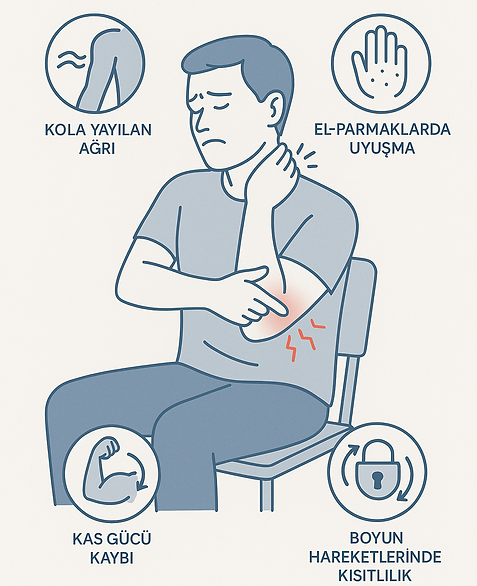
The symptoms of a cervical disc herniation can vary depending on the location of the pressure on the spinal cord or nerve root. Common symptoms include:
-
Pain radiating from the neck to the arm
-
Numbness and tingling in the hands and fingers
-
Loss of muscle strength (especially in the wrists and fingers)
-
Limited neck movements
-
Gait disturbance or urinary control problems due to spinal cord compression (in advanced cases)

Diagnostic Methods
Cervical disc herniation is diagnosed through a thorough neurological examination and appropriate imaging techniques. Our goal is to determine not only the cause of the pain but also the severity of the pressure on the nerve tissue and the spinal cord.
-
Cervical MRI (Magnetic Resonance): The degree of nerve compression and the disc are seen.
-
CT and direct radiography: Status of bone structures
-
EMG: Shows nerve conduction disturbance (in appropriate patients)
Who Needs Surgery?
Nonsurgical methods are the first option for most patients. However, surgery is recommended in the following cases:
Severe and persistent arm pain
Severe numbness and loss of strength
Gait disorder due to spinal cord compression
Loss of urinary and fecal control
Persistent complaints despite medication, physical therapy, and injections


Surgical Methods
The surgical technique we most frequently use for cervical disc herniation:
Microsurgical Anterior Cervical Discectomy (ACDF):
-
The hernia is removed through a small incision made in the anterior neck area.
-
If necessary, the disc space is supported with bone or artificial cage.
-
The surgery is performed under a microscope, preserving the nerve structures.
-
Most patients are discharged after 1 day
Post-Operative Process
-
Return to normal life within 2–4 weeks
-
Use of a light neck collar (temporary)
-
Physical therapy and posture training
-
Ergonomics adjustments are recommended for those who work at a desk for long periods of time.

Frequently Asked Questions (FAQ)
-
Can cervical disc herniation be cured without surgery?
Many patients recover with rest, medication, and physical therapy. Follow-up is important. -
Is surgery risky?
The complication rate in cervical disc herniation surgeries performed with microsurgery is very low. -
Will a plate or screw be placed?
In cases where necessary, disc space can be supported. Immobilization is not necessary for every patient.


